

The Kingdom of Saudi Arabia’s main, annual mega investment summit is called the Future Investment Initiative (FII), often referred to as “Davos in the Desert”. Held in Riyadh, it serves as the Kingdom’s flagship conference to showcase economic transformation, hosting global financial leaders, investors, and tech executives to discuss international investment, AI, and major giga-projects.
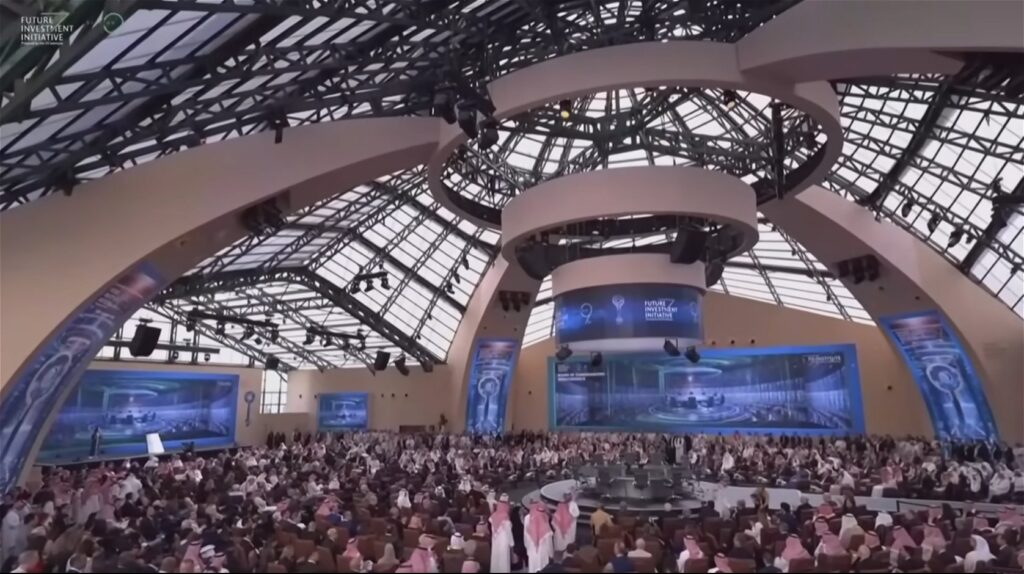
The Future Investment Initiative event (2025) captures global CEO’s discussion at the 9th Future Investment Initiative (FII) in Riyadh, Saudi Arabia, focusing on geoeconomics (0:38). Moderated by David Rubenstein, the panel features prominent global finance leaders, including CEOs from JPMorgan, Qualcomm, HSBC, BlackRock, African Rainbow Minerals, KKR, Blackstone, Goldman Sachs, and Intel, as well as a representative from Olayan Holdings.
Key discussion points include:
- Social Media Impact (1:30): Bill Ackman of Pershing Square discusses how his social media activism, particularly concerning New York City politics, has benefited his business by aligning him with partners who share his values.
- AI and Technology Investment (3:33): Cristiano Amon of Qualcomm highlights AI as a transformative technology impacting various sectors beyond data centers, including mobile, PCs, cars, and industrial machines. He suggests focusing on companies connected to consumers and those embracing “agent-type” AI experiences for enterprises.
- Return to Office Mandates (7:10): Jamie Dimon of JPMorgan emphasizes the importance of in-person collaboration for creativity, cohesion, and the development of younger employees, advocating for a full return to office work.
- Global Investment Flows (11:04): Larry Fink of BlackRock observes a significant increase in capital flowing into Saudi Arabia and the GCC region, noting that while there was a brief movement out of dollar-based assets earlier in the year, money is now returning to the United States, driven by strong tech-related capital expenditure.
- Tokenization and Digitization (13:50): Larry Fink also raises concerns about the rapid pace of tokenization and digitization of financial assets globally, suggesting that many countries are ill-prepared for its implications on currency and payment systems.
- Gold and African Investments (15:08): Patrice Motsepe of African Rainbow Minerals discusses gold as a reliable store of wealth during uncertain times and highlights Africa as an exciting but challenging investment destination, underscoring the need for it to be a globally competitive and safe environment for capital.
- Private Equity Market (17:18): Scott Nuttall of KKR explains the current challenges in private equity fundraising, attributing it to cyclicality and over-deployment in previous years, but identifies infrastructure, private credit, and real estate as attractive investment areas.
- Saudi Arabia’s Economic Transformation (19:37): Lubna Olayan of Olayan Holdings outlines the significant improvements in Saudi Arabia’s business environment, including ease of doing business, improved lifestyle, and a new investment law that grants foreign and Saudi owners equal footing. She recommends real estate (especially data centers), technology, healthcare, pharmaceuticals, and renewable energy for investment.
- US-China Relations and Investment Strategy (22:59): Steve Schwarzman of Blackstone expresses optimism for a positive outcome in US-China relations and identifies data centers, particularly those with a focus on power, as the most interesting investment area due to anticipated shortfalls in electricity supply in developed countries like the US.
- M&A and IPO Market Outlook (26:50): David Solomon of Goldman Sachs confirms the acceleration of M&A and IPO activity, attributing the previous slowdown to regulatory uncertainty and valuation adjustments. He expects continued acceleration, especially in the US, given its embedded advantages in capital markets and innovation.
- US National Debt and Economic Growth (33:01): The panel discusses the growing US national debt. Bill Ackman suggests focusing on increasing the asset side of the balance sheet, while Larry Fink emphasizes the need for a 3% growth rate to manage the debt, advocating for unlocking private capital and good policy, including deregulation, education, and proper taxation.
- Dollar’s Value and Cryptocurrency (36:41): The discussion touches upon the dollar’s recent decline, with panelists emphasizing its long-term strength due to US technological innovation and strong capital markets. On cryptocurrency, it’s described as an asset of fear, owned by those worried about currency debasement and insecurity, while Jamie Dimon acknowledges the reality and utility of underlying technologies like blockchain.